Why Kafka’sThe Metamorphosis Still Transforms Us
Some books entertain us. Others educate us. Then there are the rare books that quietly move into your head, rearrange the furniture, and refuse to leave. Franz Kafka’s The Metamorphosis did exactly that to me. I first encountered it in college, and more than forty years later, I’m still thinking about it.
That’s the mark of a truly great book. You finish reading it, place it back on the shelf, and think the conversation is over. Then, years later, something happens in your own life, and suddenly that same book is saying something entirely different. The words haven’t changed. You have. I thought I was reading a story about an insect. It took me decades to realize I was reading a story about people.
Kafka died in 1924, only ten years before Hitler rose to power and changed the course of history. He never witnessed the horrors that followed, yet somehow he understood something timeless about the human condition. He understood what it feels like to lose your place in the world.
You know you’ve reached a special place in history when people stop calling you by your first name. Nobody says Franz anymore. He’s simply Kafka. The same is true of Shakespeare, Hitchcock, Picasso, Chaplin, and Einstein. Their last names became larger than the people themselves. That is quite a legacy for a man who wanted his life’s work destroyed.
Before he died, Kafka instructed his closest friend, Max Brod, to burn all of his unpublished manuscripts. Imagine if Brod had obeyed. Literature would have lost one of its greatest voices because its creator doubted his own worth. Thankfully, Brod ignored him. Sometimes history is shaped by the people willing to disobey.
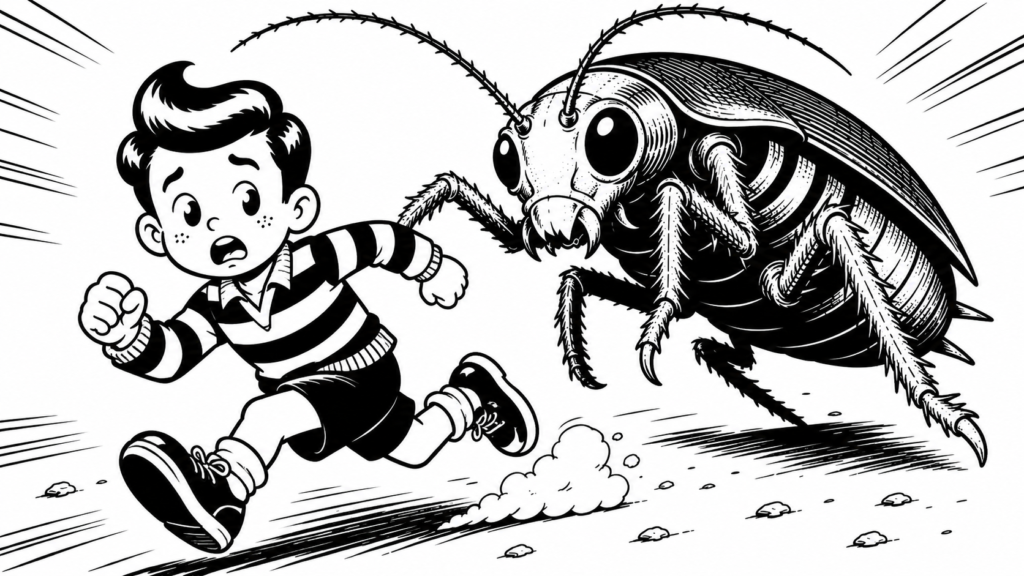
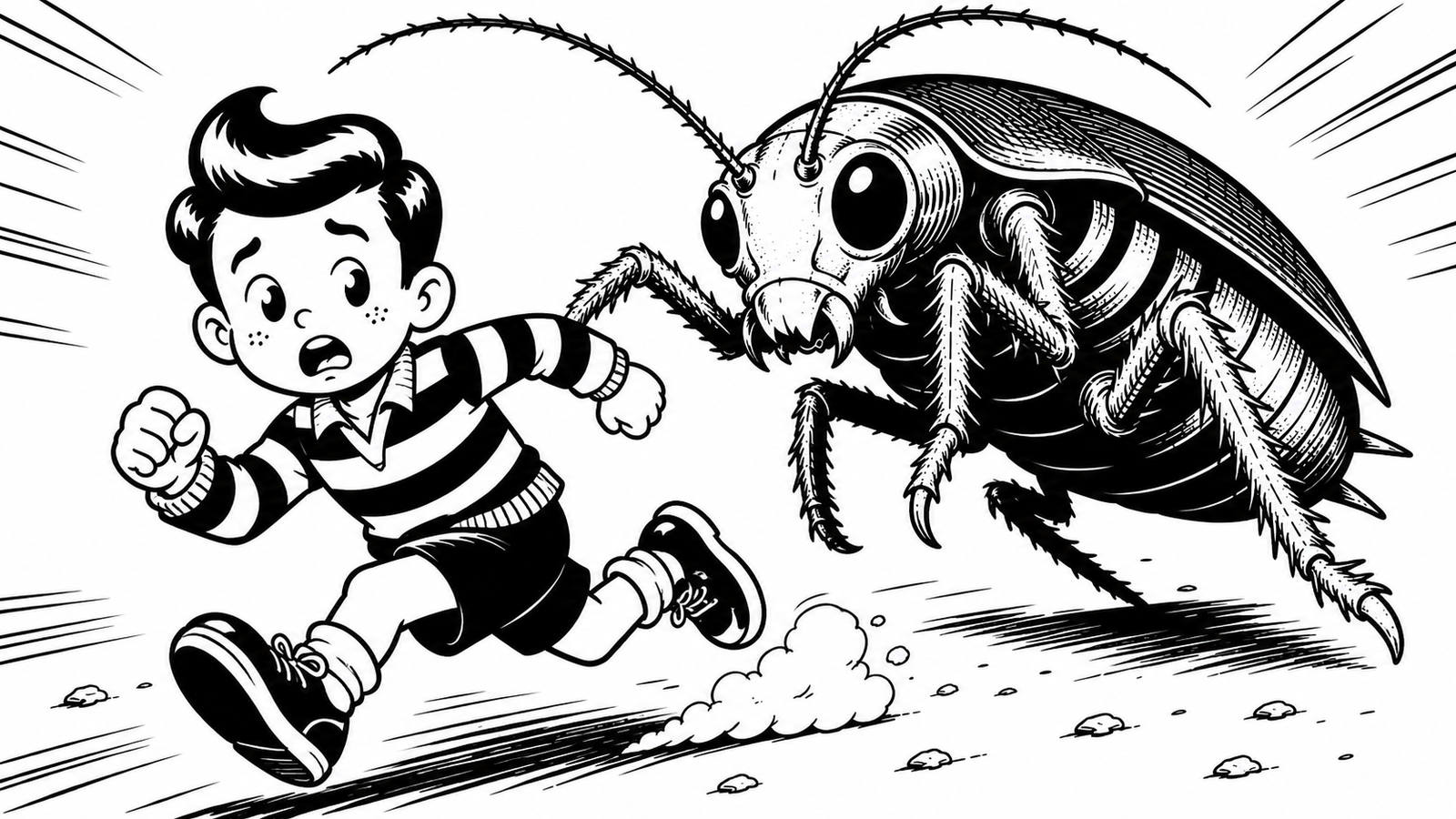
The Metamorphosis begins with one of the most famous opening lines ever written. Gregor Samsa wakes up one morning and discovers he has become a gigantic insect. Kafka does not explain. There is no scientific experiment, no curse, and no attempt to make the impossible seem believable. He simply asks us to accept it and continue reading.
I’ve always been fascinated by one small detail. Kafka never tells us what kind of insect Gregor becomes. If he had called him a cockroach, we’d spend the rest of the story imagining a cockroach. If he had chosen a beetle, readers would debate whether artists drew him correctly. By refusing to identify the insect, Kafka quietly shifts our attention away from the bug and back to the man.
Gregor isn’t simply a son. He’s the family’s provider. His parents depend on him. His sister depends on him. His job keeps the household alive. Then one morning, he can no longer fulfill the role everyone expects of him.
Imagine calling your employer and saying, “Sorry, I won’t be in today.” Naturally, the response would be, “Are you sick?” You hesitate before answering, “Well… yes and no. I’ve become a giant bug.” Human Resources probably doesn’t have a policy for that. It’s a funny image for a few seconds, and then Kafka reminds us that nothing about Gregor’s character has changed. He still loves his family, still worries about disappointing them, and still wants to provide for them. The only thing that has truly changed is how everyone else sees him.
That is why I have never believed The Metamorphosis is really about an insect. It’s about what happens when life changes us in ways the people around us cannot accept. Most of us will never wake up with six extra legs. We will, however, wake up to illness, unemployment, aging, grief, disability, depression, retirement, or simply a life that no longer resembles the one we imagined. Those changes are every bit as real as Gregor’s because they alter how we see ourselves and, sometimes, how the world sees us.
Then my brain starts doing what it always does. I have what I jokingly call my Lieberman Theory. For every reaction, there must be some kind of order in the universe. If Gregor Samsa woke up transformed into a giant insect, perhaps somewhere a tiny insect woke up transformed into a human being. Would he become a teacher? A politician? A CEO? Or would he quickly discover that human beings can be every bit as cruel to one another as children can be to insects on a summer afternoon? These are the kinds of questions that keep me awake at night.
Then another thought changed the way I looked at the story. What if there never was a bug? What if Gregor simply woke up one morning unable to carry the weight of his life anymore? Years of responsibility, sacrifice, and measuring his worth by his ability to provide may have finally convinced him that he was no longer a man worth seeing.
Perhaps the insect isn’t flesh and blood at all. Perhaps it’s what pressure looks like when it finally becomes visible. Not everyone breaks under life’s weight, but those who do can become almost unrecognizable, not because they’ve changed on the outside, but because something inside has finally given way. They withdraw. They become bitter. They lose hope. They stop recognizing the person staring back at them in the mirror. Maybe Kafka wasn’t writing about monsters at all. Maybe he was writing about pressure and what happens when some people carry so much of it that they can no longer contain it.
As I thought about that, my mind wandered to Spider-Man. What if Kafka had written Peter Parker instead of Stan Lee and Steve Ditko? The comparison fascinated me because it revealed how two stories built around extraordinary change could arrive at completely different truths. One celebrates becoming something extraordinary. The other asks what happens when society no longer sees your humanity.
Imagine Uncle Ben and Aunt May opening Peter Parker’s bedroom door only to find a giant spider clinging to the ceiling. There would be no wisecracks, no web-slinging through New York, and no cheering crowds. There would only be fear, confusion, heartbreak, and two people desperately trying to decide whether the creature before them was still the boy they loved.
That, to me, is the difference between Spider-Man and Kafka. Spider-Man is a fantasy about change, giving us power. Kafka is a meditation on change, taking our place in the world away. Peter Parker becomes someone society celebrates. Gregor Samsa becomes someone society hides. What separates them is not what happened to them. It is how everyone else responds.
Kafka’s greatest transformation wasn’t Gregor’s. It was turning one of nature’s most ordinary creatures into a timeless reflection of the human condition. Every generation reads The Metamorphosis through the lens of its own experiences, not because Kafka rewrote the story, but because life quietly rewrites us.
The longer we sit with Gregor Samsa, the harder it becomes to dismiss him as something strange or distant. We begin to recognize pieces of ourselves in him: the exhaustion, the pressure, the quiet fear of becoming invisible when we can no longer meet expectations. The impossible slowly becomes familiar.
That is Kafka’s real achievement. He didn’t write about a man who became a bug. He wrote about how easily a human being can come to feel like one. Once you see that, you can’t unsee it. After all, the bug was never the point. It was always us.
Sometimes I wonder what Kafka would think if he knew that generations of readers continue to find comfort, meaning, and even pieces of themselves in the stories he never wanted published. Would it have pleased him, or would it have bugged him? I suppose that’s one question only Kafka could answer. Then again, I imagine his response would be… transformative.

Tony Medeiros is a Montreal-based writer, publisher, and creator with more than two decades of experience telling stories about food, restaurants, pop culture, entertainment, books, comics, music, history, and the things that make life interesting. He is the creator and publisher of Sandbox World, MTL Resto Rap, and Grubbits. Through his writing and publishing, Tony continues to explore new ideas, share stories, and connect readers with the subjects he finds fascinating.