I haven’t seen Tony yet, the Anthony Bourdain biopic set in 1970s Provincetown, Massachusetts, when Bourdain was still figuring out that he wanted to become a chef. But I’ve been reading enough about it to make me curious, especially after reading Pete Wells’s piece for The New York Times, where he went to Cape Cod to find people who remembered Bourdain from those early days.
It is a great read, filled with the kind of little details I love. There is a wayward bride, a chef with a pet quahog and, most importantly as far as I am concerned, a bowl of Portuguese kale soup. That was the detail that stopped me because, growing up in a Portuguese household, kale soup was not some trendy discovery. It was dinner.
The soup is thick with kidney beans, two kinds of sausage and plenty of curly kale. Its roots go back to the Portuguese fishing community that has been part of Provincetown since at least the 19th century, and Bourdain and Laurie Woolever later adapted their own version of the recipe.
That immediately brought me back to my childhood. My parents came to Montreal in their early 30s and brought their immigrant ways with them, and my mother’s cooking was about as Portuguese as you could get. One of her favourite dishes was kale soup, which I hated with a passion.
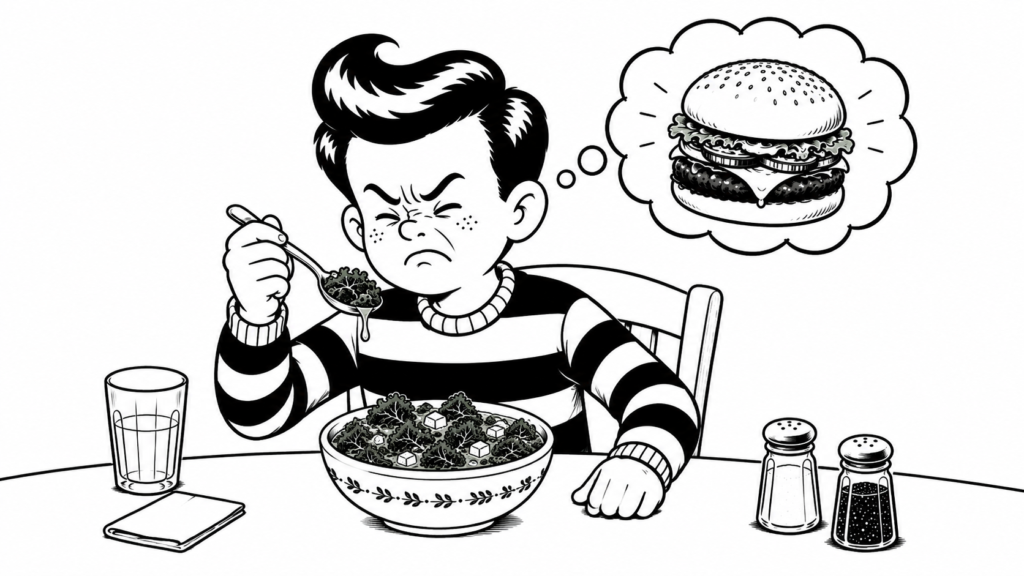
I hated that soup about as much as President George H. W. Bush hated broccoli, and kale was my kryptonite. I ate it like someone was trying to poison me while pretending it was dinner, while my mother sat there wondering what she had done to deserve such an ungrateful child.
I wanted hamburgers, hot dogs and pizza. Those were the foods I associated with growing up in North America, while my mother was trying to keep a little piece of Portugal alive at the dinner table. When you grow up in an immigrant family, food can become a tug-of-war between where your parents came from and where you are trying to fit in.
As my mother got older, she started making more American-style food for us, but she could never completely abandon her Portuguese roots. She would make burgers, chicken and other things I actually wanted to eat, then put her own Portuguese spin on them. That is what mothers do for their kids. They adapt, even when they probably think their children have terrible taste.
Looking back, I understand it differently now. My parents had left Portugal, moved to Montreal and were building a new life, so food was one of the things they could bring with them without needing a suitcase. A recipe could cross an ocean, and my mother could put a little piece of home on the table whenever she wanted.
Then, a few years ago, I went to Vermont and discovered that kale had apparently taken over the state. Kale soup, kale chips, kale everything. These tree-hugging Vermonters had taken my childhood nemesis and turned it into a lifestyle.
I was looking for a good hamburger while people were explaining the many virtues of kale. I could almost hear my mother laughing from heaven. After all those years, she had finally been proven right, and she did not even have to be there to enjoy it.
I still wasn’t buying it. Eventually, I tried kale chips, mostly because I wanted to know how bad things could get. What was next, seaweed chips? There is plenty of seaweed back home in Portugal, so maybe somebody will eventually put it in a bag, charge twelve dollars for it and call it artisanal.
I just wanted a good old-fashioned hamburger. What is becoming of the world?
Then along comes Anthony Bourdain with his Portuguese kale soup. His version has kidney beans, two kinds of sausage and enough kale to make you feel like you are doing something responsible while eating it. I have to admit, it was better than the soup I remembered from childhood, which is something I never thought I would say.
There is something funny about spending your childhood trying to escape the food your parents brought from Portugal, only to have Anthony Bourdain come along decades later and make you reconsider it. Apparently, all my mother needed was a famous chef to make her soup fashionable. If Bourdain had shown up at our house when I was eight, Mom probably would have made him an extra bowl and told me to finish mine.
Apparently, you can still find bowls of Portuguese kale soup in Provincetown today. If you happen to be nearby, that sounds like a pretty good excuse to order one, and if you are not, the recipe is simple enough to make at home. While the pot is simmering, you might as well pull out Kitchen Confidential, the book that turned Bourdain into the bad boy of the kitchen.
I can almost picture my mother sitting across from him, talking about Portuguese food while I stood nearby wondering when somebody was going to order a hamburger. She would have loved him, and I suspect they would have gotten along famously.
After all these years, I have to give Mom some credit. She spent years trying to get me to appreciate the food she grew up with, while I spent years trying to get her to make the food I thought everybody else was eating. Somewhere in between, she won a little and I won a little, which is probably how families work.
I still prefer a hamburger, but I can appreciate what my mother was trying to give me. Portuguese kale soup was never just soup. It was a little piece of home, served by a woman who had left Portugal, started a new life in Montreal and was doing her best to make sure her kids remembered where they came from.
And somehow, after all those years, Anthony Bourdain has me thinking maybe Mom was onto something after all. I may respect the soup, and I may even admit that his version was pretty good, but let’s make one thing clear: I will never surrender to kale.
Some battles are simply not worth losing, especially when there is a perfectly good hamburger waiting for me somewhere. My mother may have won the war of Portuguese cooking, but kale and I are still negotiating the terms of our peace treaty.

Tony Medeiros is a Montreal-based writer, publisher, and creator with more than two decades of experience telling stories about food, restaurants, pop culture, entertainment, books, comics, music, history, and the things that make life interesting. He is the creator and publisher of Sandbox World, MTL Resto Rap, and Grubbits. Through his writing and publishing, Tony continues to explore new ideas, share stories, and connect readers with the subjects he finds fascinating.