Life has a funny way of taking you down roads you never planned to travel. You think you are headed in one direction, then life throws a detour in front of you and suddenly you are somewhere you never expected to be.
I got one of those roadblocks when my son became ill. The Montreal Children’s Hospital took care of him and, thankfully, helped make him well again. When something like that happens, gratitude changes you, and I wanted to give something back by finding a way to raise money for the hospital.
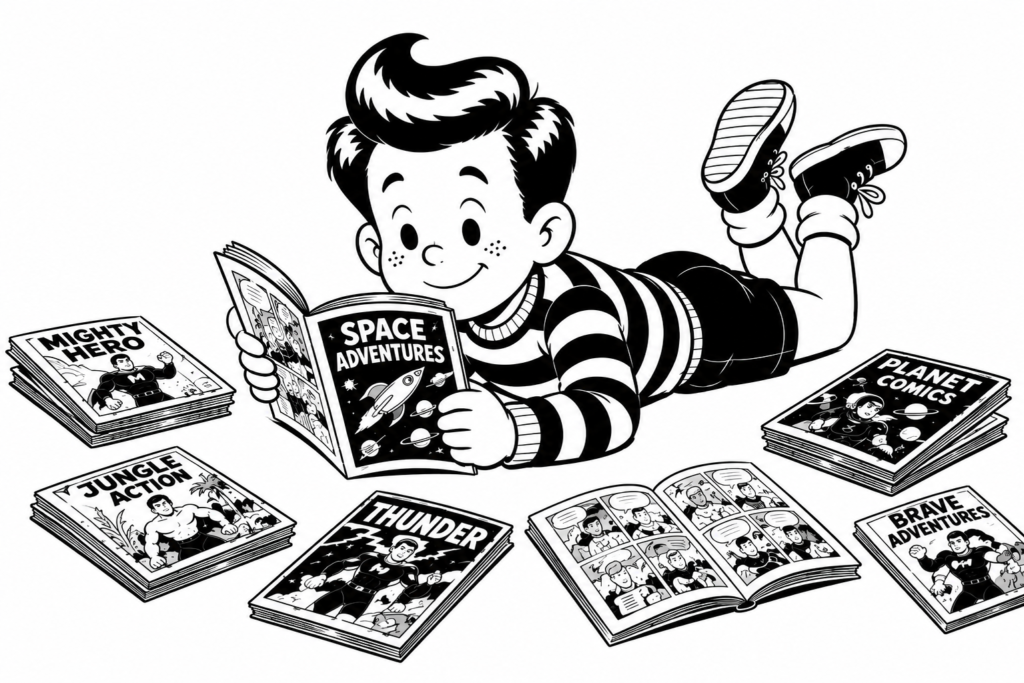
Then I remembered what made me happy as a kid: comic books. I thought, why not make a comic book and use it to raise money?
It sounded simple until I actually tried to do it. I brainstormed all kinds of ideas and quickly realized I needed help, so I emailed Chris Oliveros, the publisher of Drawn & Quarterly, and asked for his unbiased opinion. I was hoping he might know an artist who would be interested in helping me get the project off the ground.
He did. He introduced me to Bernie Mireault, a Montreal underground artist who lived in Mile End, a neighbourhood that had once been affordable enough for artists to actually live there. Eventually, the rents went up and some of the people who helped give the neighbourhood its character could no longer afford to stay.
I met Bernie, explained what I wanted to do and we started talking. He suggested reworking one of his older comic ideas, Dr. Robot, which had previously been published by Dark Horse Comics. I looked at it and saw potential, and when Bernie asked for $1,000 for the project, we shook hands and I was in.
Now I needed a printer. Montreal happened to be a major centre for comic book printing, and Quebecor had experience printing books for major publishers, so I went to their offices, explained the project and made my pitch. Somehow, I walked out with a deal, and suddenly my crazy idea had become a real comic book.
I even had my own publishing line: X-Press Comics.
The next problem was finding somewhere to sell it. I met with the manager of a Cineplex theatre in Montreal and explained what I was doing, and he agreed to let me sell the comic during the premiere of The Incredibles.
We sold it for two dollars, and I had managed to get the printing cost down to about 40 cents a copy. By the time everything was finished, we had raised close to $15,000 for the Montreal Children’s Hospital, which was the whole reason I had started this adventure in the first place.
Then the media found out about the comic. Reporters started calling, and I sent them Bernie’s way because I figured he deserved the publicity. He was the artist behind the project, and I wanted people to know who he was.
That was pretty much the last time I saw Bernie. He contacted me later about other projects, but I felt that ship had sailed because I had put a lot of work into getting this one moving and knew how easily it could have fallen apart.
Bernie was a struggling artist, and from what he told me, making a living from comics was difficult. Still, this was what he wanted to do, and I could see how much it meant to him.
Years later, I was sitting in a theatre watching Spider-Man and stayed through the credits, as I usually do. I watched the names roll by and started thinking about all the artists and writers behind the characters we grew up with. The movies can make billions while the people who helped create those worlds do not necessarily share in that success.
That thought brought me back to Bernie. He died by suicide on September 2, 2024, and I cannot pretend to know everything that was happening in his life or what was going through his mind. I only know the Bernie I met, and I remember a talented man who was struggling to make a living doing the thing he loved.
We often tell people to follow their dreams, usually after the dream has worked out. We do not talk nearly as much about the people who follow theirs and struggle along the way, even though their work can still bring enormous happiness to other people.
When I was sick as a kid, my mother bought me crayons and sat with me while we drew. Those crayons made me happy, and I remember thinking that one day I would become a comic book artist. Well, that did not exactly work out, because I became a publisher instead.
Not the greedy kind. At least I hope not. I became the kind of publisher who got the chance to make one comic book, work with an artist like Bernie and use it to give something back to the hospital that had helped my son.
I never became the artist I imagined I would be, but I got close enough to understand why someone would spend a lifetime chasing that dream. That is what I wish people remembered about struggling artists. They are not failures because they did not become rich or famous. Sometimes they spend their lives creating things that make other people happy without ever receiving the financial security that comes with success.
When I think about Bernie now, I do not want to remember him only as a struggling artist or as the sad ending to a story about following your dreams. I would rather remember the guy who sat down with me, took a chance on a crazy idea and helped me turn a comic book into something that gave back to the hospital that had helped my son.
I wish things had worked out differently for him. I wish there had been more room in this world for artists like Bernie to make a living doing what they loved. Maybe we have spent too much time measuring success by money and fame when the real value of someone’s work can be much harder to see.
When I was sick as a kid, my mother gave me crayons and sat beside me while we drew. I remember thinking that one day I would become a comic book artist. I never did, but years later I found myself sitting across from Bernie Mireault, shaking hands over a comic book project that would raise money for the same hospital that had helped my son.
Somehow, I had wandered into the dream from a completely different direction.
Bernie never became rich or famous, and his story did not have the ending anyone would have wanted. But he created things that mattered to people, including me. I wish the world had been kinder to him, and to the many artists who spend their lives creating things we love while struggling to make a living themselves.
Maybe that is what I think about when I watch those long movie credits roll. Behind every famous character is a person who once sat down with a pencil and an idea. Some became household names. Others disappeared into the credits. That does not mean their work meant less.
My mother gave me crayons when I was a sick kid, and those crayons gave me a little happiness when I needed it. Bernie gave me a comic book, and together we turned it into something that helped other kids. I never became the comic book artist I dreamed I would be, but I did get to make a comic book.
And when I look back now, I guess the detour was not so far from the dream after all.

Tony Medeiros is a Montreal-based writer, publisher, and creator with more than two decades of experience telling stories about food, restaurants, pop culture, entertainment, books, comics, music, history, and the things that make life interesting. He is the creator and publisher of Sandbox World, MTL Resto Rap, and Grubbits. Through his writing and publishing, Tony continues to explore new ideas, share stories, and connect readers with the subjects he finds fascinating.