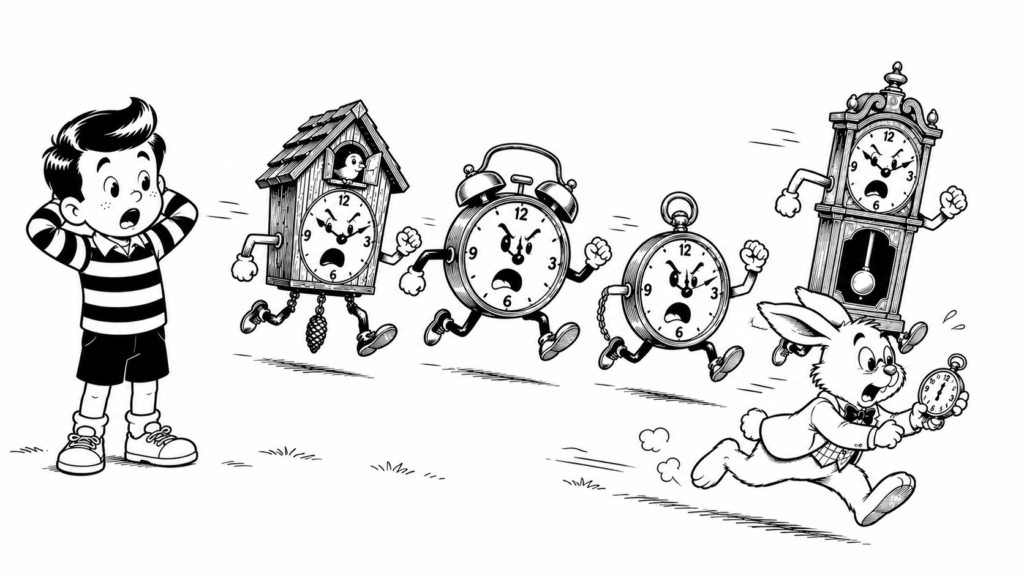
Every spring and fall, my biggest adventure isn’t travelling. It’s chasing one missing hour.
The U.S. House of Representatives passed the Sunshine Protection Act on July 14, 2026, to make daylight saving time permanent across the United States. The bill still has to pass the Senate and receive the President’s signature before it becomes law, so for now, we are all still trapped in the twice-a-year ritual of changing our clocks. I sincerely hope it succeeds because I have reached the point where I cannot stand daylight saving time.
Every spring and every fall, it barges into our lives like that friend who says, “I’ll only stay an hour,” and somehow spends the entire weekend on your couch. It steals your sleep, throws off your routine, and convinces us this is perfectly normal. We have been doing this for well over a century, and I still can’t understand why.
My biggest adventure every year isn’t climbing a mountain, travelling somewhere exotic, or training for a marathon. It’s changing every clock in the house. Twice a year, I embark on the same quest, once to gain an hour of sleep and once to lose one. Somewhere along the way, I became the White Rabbit from Alice’s Adventures in Wonderland, except he only had one pocket watch to worry about.
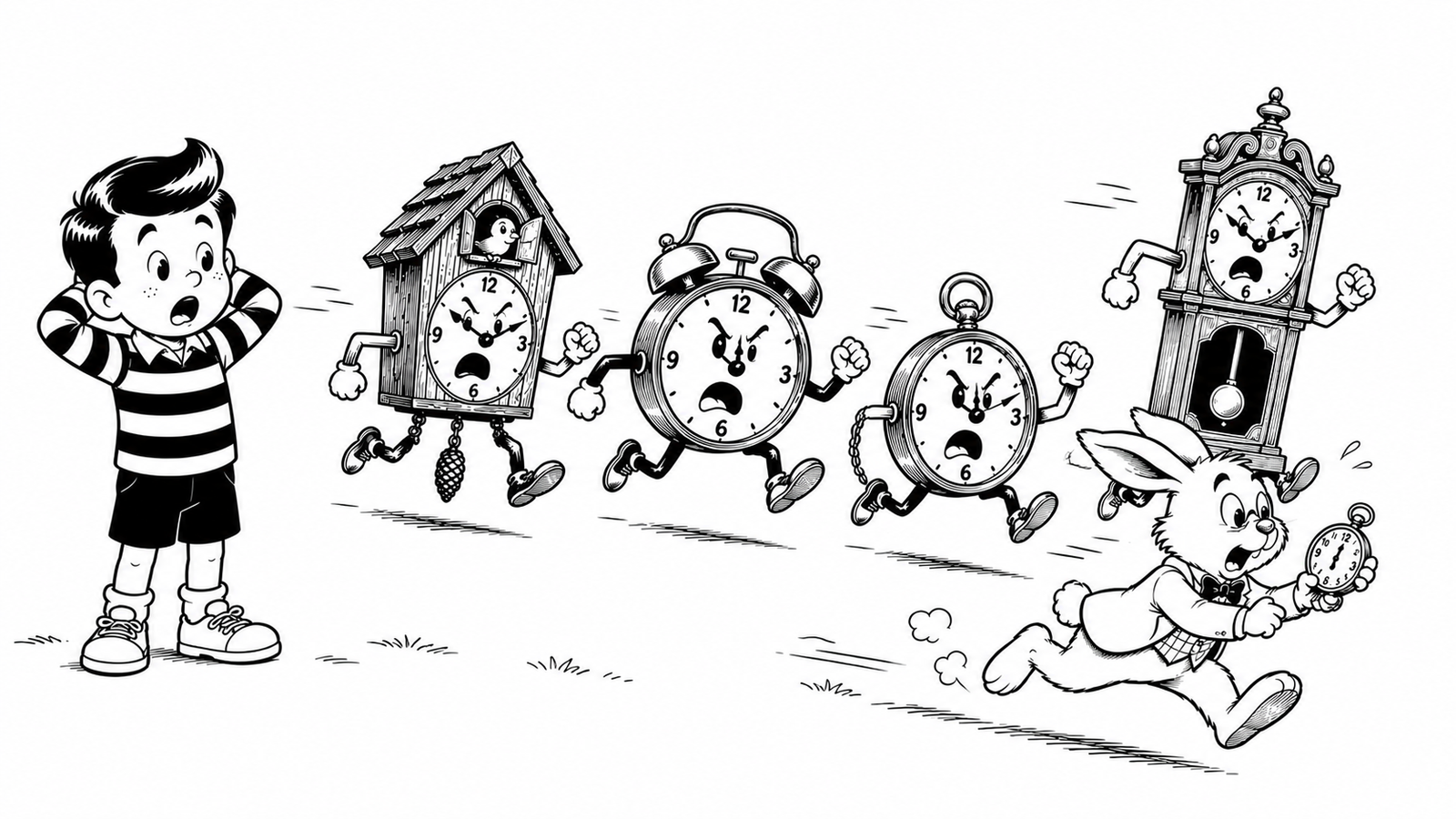
Every six months, I find myself wandering through the house carrying a step ladder like some kind of time repairman. The funny part is that I only touch most of these clocks twice a year. The other 363 days, they quietly hang on the wall, asking absolutely nothing of me. Then one Sunday morning, they all seemed to decide they needed my immediate attention.
Since I drive a lot, the early darkness bothers me more than anything else. Five o’clock suddenly feels like midnight, and leaving work feels like the day has been cancelled halfway through. My brain refuses to accept that supper is only an hour away because outside, it already looks like bedtime. If making daylight saving time permanent means I never have to experience those dark afternoons again, sign me up.
Canada is watching all of this unfold with one eye on Washington. Because our economy, transportation, and trade are so closely tied to the United States, several provinces have said they are waiting to see what happens before making any permanent changes of their own. Imagine needing international cooperation just to figure out what time dinner should be.
The history behind daylight saving time is just as strange as the ritual itself. Benjamin Franklin joked that getting people out of bed earlier would save candle wax. Then, in 1908, the town of Port Arthur, now part of Thunder Bay, became the first place in the world to officially observe daylight saving time. Germany later adopted it during the First World War as an energy-saving measure, which is why many people mistakenly believe it started there. Sometimes I imagine the White Rabbit racing through history, pocket watch in hand, shouting, “I’m late!” If only someone had stopped him long enough to say, “Relax. Leave the clocks alone.”
My expedition always begins with the wall clock. Taking it down is easy. Putting it back up is another story. The hook that has faithfully held the clock for the past six months suddenly becomes invisible. I miss it once. I miss twice. By the third attempt, I’m balancing on a chair, holding a three-pound clock over my head, wondering if the hook quietly moved during the night.
That’s usually when I picture the White Rabbit looking at his watch, shaking his head, and deciding this is one adventure he doesn’t want to be part of.
The kitchen is next, and every appliance seems determined to prove it has its own personality. I’m convinced every manufacturer hires a different engineer whose only job is making sure nobody can figure out how to change the clock without pressing the wrong button first. The microwave follows one set of rules. The oven follows another. Then there are the clocks you’ve quietly given up on. My coffee maker has been flashing twelve o’clock for so long that I don’t even notice anymore. It has stopped being a clock and become part of the kitchen décor.
Just when I think the mission is over, I remember the bedroom clock. Then the spare room. Then the one in the basement I forgot existed. Every year, there’s one clock that hides from me. I finally sit down with a cup of coffee, convinced I’ve conquered time itself, only to glance across the room and discover one lonely clock still living six months in the past.
The final challenge is always the car clock. Whoever designed that menu system clearly believed changing the time should require the same training as piloting a commercial aircraft. After twenty minutes of scrolling through menus, I usually reach the same conclusion every year. If I leave it alone, eventually daylight saving time will come around again and the clock will magically be right. Sometimes doing nothing is the smartest repair you’ll ever make.
One of the biggest myths surrounding daylight saving time is that it was created for farmers. It wasn’t. Many farmers have disliked it from the very beginning because cows don’t wear watches and chickens don’t own smartphones. Animals live by the sun, not by politicians, and they certainly don’t care what someone in Ottawa or Washington says the clock should read. Try explaining daylight saving time to a cow. She’ll ignore your lecture and wait for sunrise anyway.
Then spring arrives and we lose an hour of sleep. Everyone spends the next week walking around like sleep-deprived zombies, wondering why they can’t concentrate even though we all know exactly why. Somehow, we keep repeating the same experiment every year and expecting it to feel different.
When the adventure is finally over, I collapse into my favourite chair feeling as though I’ve completed an endurance event. I’ve climbed ladders, walked from room to room dozens of times, crawled behind furniture, searched every corner of the house, and argued with electronics that refuse to cooperate. At least I’m getting some exercise, although I can’t help thinking there must be easier ways to stay in shape than chasing one missing hour around the house.
Maybe the Sunshine Protection Act will finally put an end to this annual ritual. If it does, I’ll happily retire my step ladder every March and November, leave the clocks exactly where they are, and spend my Sunday morning doing something I actually enjoy. Until then, twice a year I’ll continue my little expedition from room to room, changing clocks that never asked to be changed in the first place.
Perhaps that’s the greatest irony of daylight saving time. We spend an entire afternoon changing clocks so we can save an hour, yet we probably lose more time looking for ladders, hunting down instruction manuals, and trying to remember how to reset the clock in the car than we ever gain. Maybe one day we’ll finally decide enough is enough. Until then, I’ll keep chasing that missing hour like clockwork, and if nothing else, at least I’m getting some exercise.

Tony Medeiros is a Montreal-based writer, publisher, and creator with more than two decades of experience telling stories about food, restaurants, pop culture, entertainment, books, comics, music, history, and the things that make life interesting. He is the creator and publisher of Sandbox World, MTL Resto Rap, and Grubbits. Through his writing and publishing, Tony continues to explore new ideas, share stories, and connect readers with the subjects he finds fascinating.