Growing up in Rosemont with the Great Antonio just around the corner.
Every neighbourhood had its own landmarks. Ours just happened to breathe. Some were made of brick. One stood on the corner of Beaubien and Papineau.
There was the butcher shop, the little variety store with its incredible Japanese tin robots in the window that every kid wanted but few of us could afford, the apartment above where my childhood crush lived, and, standing on the sidewalk as though he’d always been there, the Great Antonio. Between the robots in the window, the girl upstairs, and Antonio on the corner, that stretch of Beaubien and Papineau felt like the centre of the universe. Looking back, I don’t think Hollywood could have built a better set for a kid growing up in Montreal.
When you’re a kid, the world always seems bigger than it really is. Every street is an adventure, every vacant lot hides buried treasure, and every unusual person could have stepped out of the pages of a comic book. Growing up in Montreal, my imagination didn’t need much encouragement. A stack of comics, Saturday morning cartoons, a pack of bubble gum, and a bicycle were enough to keep me busy until my mother called me home for supper.
My bicycle carried me all over Rosemont. Every shortcut, alley, and side street promised another adventure. Most days I came home with scraped knees or another story to tell, but there was one corner that always drew me back.
Most mornings, Antonio planted himself on that corner as the neighbourhood came to life. I knew it well because the girl I had a crush on lived in the apartment above the shop. Funny how memory works. I can still picture Antonio holding court on the sidewalk while, now and then, I’d glance up at those second-floor windows, hoping to catch a glimpse of her.
The Great Antonio was like the headliner of a travelling circus that had pitched its tent in our neighbourhood. He didn’t have to perform. His towering presence was enough.
Long before YouTube, we measured greatness by one book: the Guinness Book of World Records. Antonio wasn’t just in it. He was one of the reasons kids like me kept turning the pages, wondering how anyone could pull a train. Whenever I saw him, I couldn’t help thinking of Bigfoot from The Six Million Dollar Man. To a comic book kid like me, Antonio looked as though he had wandered off a television screen and onto the streets of Montreal.
Everything seemed bigger back then. We had the Incredible Hulk, André the Giant, Bigfoot, and, in our neighbourhood, the Great Antonio. Nobody wanted to be known as “Antonio the Small.” Well, maybe one person did. That’s what my mother called my dad. He wasn’t big in stature, but he was big where it counted: his heart. Before your imagination starts running wild, that’s exactly what I meant.
Antonio always reminded me of Oscar Wilde’s The Selfish Giant, except he was the complete opposite. Wilde’s giant chased children away. Antonio attracted them. Adults gathered to hear another story and often left with a signed photograph after slipping him a few dollars. We stood nearby, laughing at his expressions, listening to his booming voice, and wondering if any of it was true. We didn’t care. For a few minutes, he made our little corner of Montreal feel like the centre of the world.
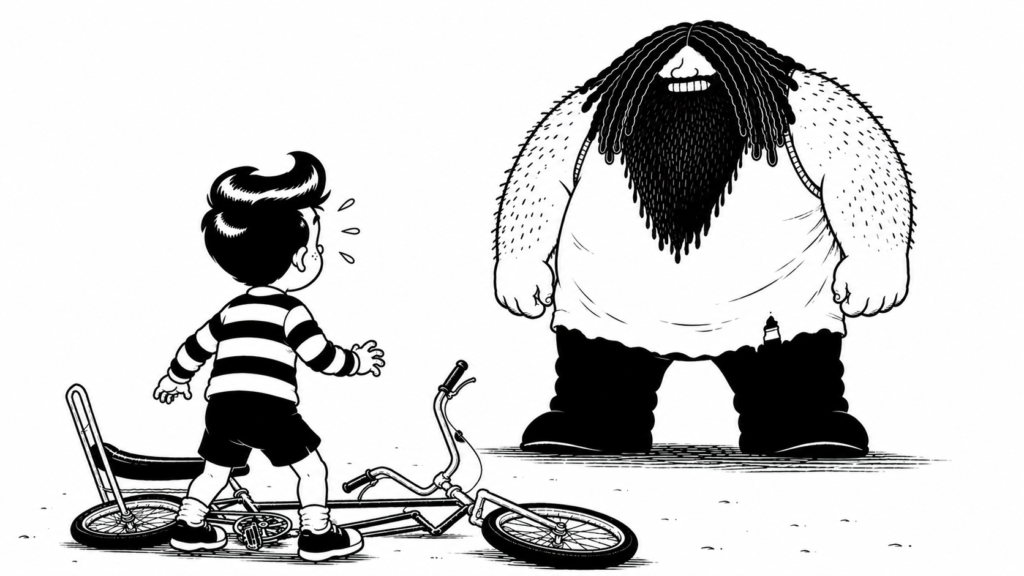
My friends were just as fascinated by Antonio as I was, but none of us were eager to get too close. If he suddenly barked, “Boo!” we’d scatter like pigeons. He knew exactly what he was doing. There was a mischievous glint in his eye, and he seemed to enjoy watching a bunch of neighbourhood kids jump. It was a harmless little power trip and, truth be told, we loved every second of it.
The first time you saw him, you never forgot him. His tangled hair, bushy beard, worn clothes, and enormous frame made him look as though he had stepped out of a comic strip. He wasn’t frightening. He was unforgettable.
It wasn’t until I got older that I learned who he really was. Antonio Barichievich immigrated to Canada after the Second World War and became internationally famous for pulling a four-hundred-tonne train in Montreal, dragging buses filled with passengers, wrestling professionally, and appearing on television and in films. The world knew him as a legendary strongman. We simply knew him as Antonio.
During high school, I saw him almost every day while riding the city bus. Montreal’s potholes launched passengers into the air with impressive consistency. Quebecers call them nids-de-poule, or chicken nests, but they always looked more like craters to me. While everyone inside the bus bounced around, Antonio often sat quietly on the sidewalk, as solid and unmoving as the buildings around him.
By the time I started college, I found him downtown selling autographed photographs and telling stories to anyone willing to stop. Every conversation became a performance. Some details changed from one telling to the next, but that hardly mattered. Antonio understood something long before the internet. A good story doesn’t have to be perfect. It just has to make people stop and listen.
Looking back, I realize I never actually spoke with the Great Antonio. I was simply another neighbourhood kid watching from a respectful distance. Whether he noticed us never really mattered because we certainly noticed him.
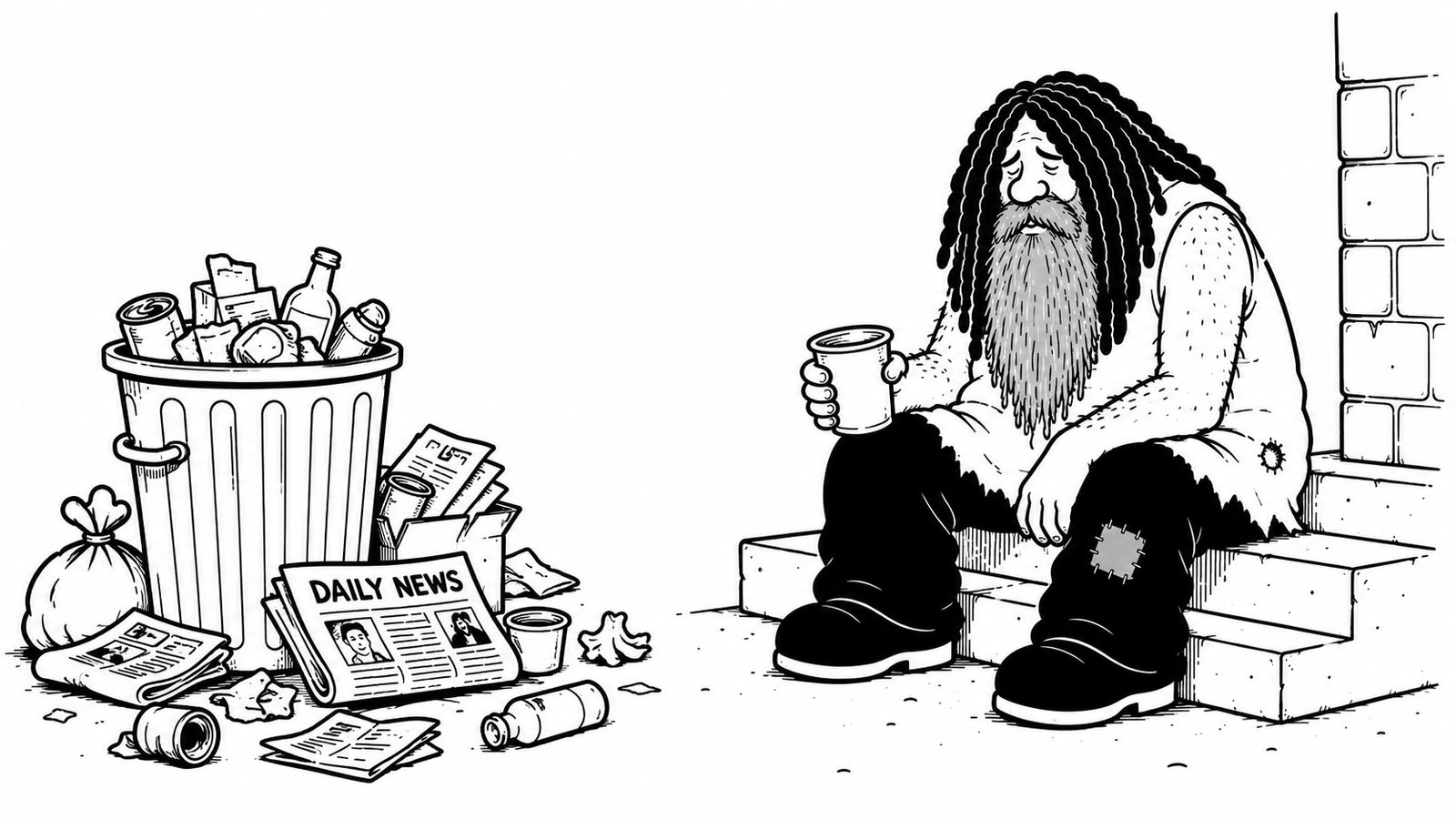
The world-famous strongman eventually became just another familiar face in the neighbourhood, sitting on a sidewalk, telling stories, selling signed photographs, and trying to earn enough money for his next meal. We kept our distance, but we never kept him out of our neighbourhood.
I sometimes think we’ve lost a little of that today. Someone like the Great Antonio would probably become the subject of a dozen cellphone videos before anyone stopped to appreciate the person behind the legend. Back then, people simply accepted him for who he was.
Antonio passed away in 2003, but legends rarely disappear. His archives are preserved at the McCord Stewart Museum, children’s author Elise Gravel introduced him to a new generation, and his story continues to be told because every generation seems to rediscover him.
When I think about the Great Antonio today, I don’t just remember a man who pulled trains. I remember the smell of the butcher shop, the tin robots in the variety store window, the girl upstairs, and a giant standing on the corner of Beaubien and Papineau as though he’d always been there.
The records, the television appearances, and the incredible feats of strength made him famous. But that’s not what stayed with me. What I remember is a neighbourhood where legends didn’t live in books or on television. They lived just around the corner.

Tony Medeiros is a Montreal-based writer, publisher, and creator with more than two decades of experience telling stories about food, restaurants, pop culture, entertainment, books, comics, music, history, and the things that make life interesting. He is the creator and publisher of Sandbox World, MTL Resto Rap, and Grubbits. Through his writing and publishing, Tony continues to explore new ideas, share stories, and connect readers with the subjects he finds fascinating.