One conversation about professional wrestling ended my mother’s Saturday afternoon tradition forever.
People have been arguing about professional wrestling for as long as I can remember. Is it fake or is it real? Of course, there are always those people who can’t wait to spoil it for everyone by announcing it’s fake, as though they’ve uncovered one of history’s greatest conspiracies. Whenever someone asks me if wrestling is real, I usually smile because the question reminds me of something that happened years ago with my mother. Looking back, I wish I had simply kept my mouth shut.
Growing up in the Ontario and Quebec region during the late 1970s and early 1980s, George Cannon’s Superstars of Wrestling was required viewing in our house. Saturday afternoons meant grabbing a seat in front of the television and watching the heroes battle the villains. My mother never missed it. She wasn’t interested in championship histories or wrestling statistics. She simply wanted the good guys to win and the bad guys to get exactly what they deserved. Back then, wrestling was still divided into territories before Vince McMahon eventually gobbled up almost everything.
There was one wrestler she absolutely couldn’t stand, and that was Otto von Heller. The moment he appeared on the screen, she would start talking to the television as though he could hear every word. I never completely figured out why she disliked him so much. Maybe it was the shiny bald head. Maybe it was the permanent scowl. Whatever the reason, Otto von Heller had already been convicted before the referee even rang the opening bell.
The funny part is that poor Otto wasn’t one of the promotion’s biggest stars. He was what wrestling calls a jobber, the wrestler whose job was to make everyone else look like a future champion. Week after week, he walked into the ring knowing he probably wasn’t leaving with his hand raised. My mother didn’t know that, and she certainly didn’t care. As far as she was concerned, he was one of the villains, and seeing him lose was one of the highlights of her afternoon. For all we know, the poor guy might have spent Monday to Friday working as an accountant.
One afternoon, after listening to another one of her passionate speeches directed at poor Otto, I decided to share what I thought was an interesting piece of information. I explained that wrestling wasn’t really a competition. I told her the matches were planned, the winners were chosen ahead of time, and the wrestlers worked together to tell a story. I thought I was letting her in on one of television’s biggest secrets.
She listened without saying very much. When I finished, she looked at me, turned back toward the television, and quietly watched the rest of the program. She looked like a deflated balloon. She never watched another wrestling match again. In less than ten minutes, I had managed to ruin one of her favourite television shows, and I’ve honestly felt guilty about it ever since.
The older I get, the more I realize she wasn’t watching wrestling because she believed every punch was real. She watched because she believed in the story. She wanted heroes to overcome impossible odds, villains to get what was coming to them, and justice to be served before the closing credits rolled. Once I pulled back the curtain, the magic disappeared. I hadn’t exposed a fraud. I had simply spoiled the illusion.
That’s why I’ve never liked calling professional wrestling fake. The stories are scripted, but the bumps are real. Wrestlers still hit a wooden ring hundreds of nights a year. They still suffer broken bones, torn muscles, concussions, and bad knees. Gravity doesn’t care whether the finish was written three weeks earlier.
I’ve always thought wrestling has more in common with comic books than with hockey or football. We know Batman isn’t real, yet we still cheer when he beats the Joker. We know actors aren’t really superheroes, but we happily buy a ticket anyway. Wrestling asks us to make the same deal. Suspend your disbelief for a couple of hours and enjoy the ride.
Now and then, I’ll stumble across an old episode of George Cannon’s Superstars of Wrestling on YouTube. Sure enough, Otto von Heller is usually somewhere on the card, making another fan favourite look like a million bucks. Every time I see him, I can’t help but picture my mother sitting in the living room, pointing at the television and telling him exactly what she thinks of him.
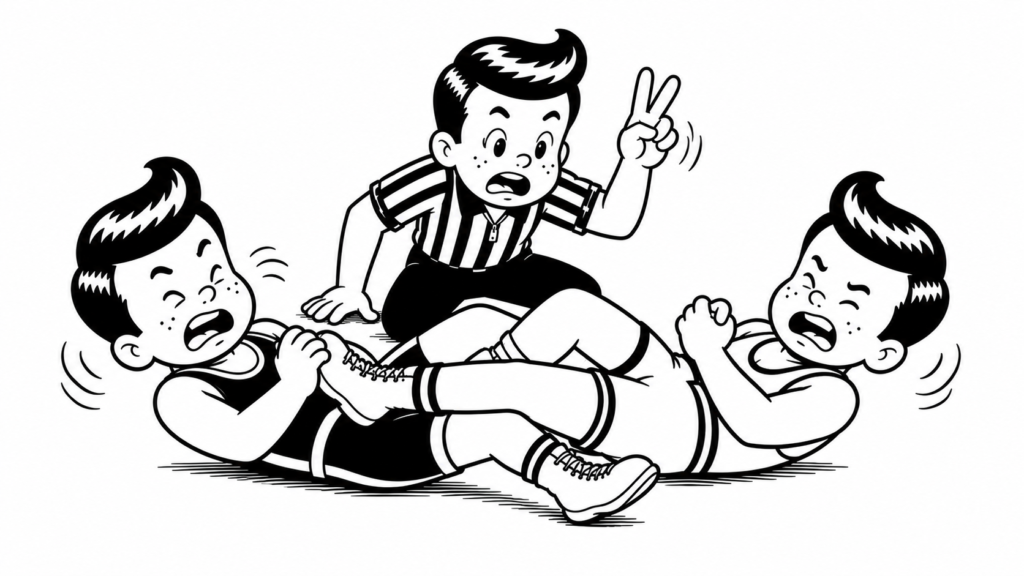
Many years later, I find myself sitting on the couch watching wrestling with my son and my wife, and history has a funny way of repeating itself. We even bought a bigger television so we could watch grown men in colourful underwear throw each other around a ring. I don’t usually mention that to my highbrow friends. Then again, maybe they’re secretly watching too. Wrestling has been declared dead more times than I can count, yet millions of people still tune in every week.
My son is completely invested. He boos his favourite heel with enough enthusiasm to wake the neighbours, and I wouldn’t have it any other way. He gets caught up in the stories exactly the way my mother did all those years ago. My wife has taken a different approach. She’s convinced she’s inherited the Amazing Kreskin’s ability to predict every twist before it happens. Every few minutes, she’ll grin and say, “See, even I could have written this stuff,” and more often than not, she’s right.
Every once in a while, I wonder if I should have “the talk” with them, the same one I had with my mother. Should I explain kayfabe? Should I tell them how the stories are put together and why the referee somehow never sees the folding chair? Then I remember the look on my mother’s face that afternoon, and I decide they’re much more entertaining this way.
These days, I’m far more entertained watching my family than I am watching the wrestlers. Around some dinner tables, families solve the world’s problems over coffee. In our house, we watch sweaty men yelling at each other over a championship belt and debate whether the referee is blind. Honestly, somebody should just hand them the belt for bad behaviour and call it a day.
Sometimes I picture my mother sitting between my son and my wife. My son would be booing at the top of his lungs, my wife would be predicting every plot twist before it happened, and my mother would still be yelling at Otto von Heller as though he had personally wronged our family. Somewhere in the background, I’d probably be laughing harder at the three of them than at anything happening inside the ring.
That may be the real reason wrestling has survived for generations. Families go together, friends go together, and for a couple of hours, everyone is cheering, booing, laughing, and arguing over the same story. It isn’t really about who wins the championship belt. It’s about spending time together and sharing the experience. Wrestling promoters figured that out a long time ago, and they’ve been happily prying a few dollars out of our pockets ever since.
Maybe that’s why I don’t answer the question, “Is wrestling real?” the way people expect anymore. The stories may be scripted, but the enjoyment certainly isn’t. I learned that lesson from my mother.
This one is.

Tony Medeiros is a Montreal-based writer, publisher, and creator with more than two decades of experience telling stories about food, restaurants, pop culture, entertainment, books, comics, music, history, and the things that make life interesting. He is the creator and publisher of Sandbox World, MTL Resto Rap, and Grubbits. Through his writing and publishing, Tony continues to explore new ideas, share stories, and connect readers with the subjects he finds fascinating.